Web Search APIs Built for AI Agents and LLMs
AI agents need search APIs built for machines, not browsers.

Most AI agents fail in production for a reason that has little to do with model quality. They fail because the search layer beneath them was built for a human reading a browser window, not for a machine deciding what to fetch next. Web search APIs built for AI agents and LLMs are a different class of infrastructure entirely: they optimize for structured output, freshness, low latency, and RAG-pipeline compatibility rather than click-through behavior. Understanding those distinctions is what lets a developer choose correctly, and choosing correctly is often the difference between an agent that works and one that craters on its third search hop.
Why AI agents fail when built on search infrastructure designed for human browsers
A human search engine returns an HTML page meant to be read. An agent receives that same page as a blob it must parse before it can begin to reason, and that parsing step is not trivial: it consumes context window, computational cycles, and time, and it repeats on every hop in a multi-step task. What compounds the problem is that traditional SERP results hand the agent a pointer to content rather than the content itself. The agent must then decide whether to fetch the page, which adds latency and opens another failure surface at every turn.
Stale context is the most common production failure mode, and it is the most dangerous because it is invisible. A model is a reasoning engine, not a memory. When the retrieval layer serves it yesterday's web, the reasoning itself becomes unreliable regardless of how well the rest of the stack is designed.
What a web search API built for AI actually does differently
A web search API built for AI returns structured, machine-readable content at inference time, not an HTML page built for a browser. That single architectural difference changes everything downstream. Instead of HTML to parse, the agent receives JSON or Markdown, pre-extracted and ready for a retrieval-augmented generation pipeline without additional processing. The output includes URLs, titles, snippets, and, depending on the provider, full page content, so the agent can reason over what it finds rather than issuing a second request to fetch it.
The category has split into two clear tiers. SERP-style APIs return pointers useful for rank tracking, while AI-native APIs return extracted content the agent can act on directly. That difference matters more than it sounds, because it determines how many subsequent requests the agent must issue before it can reason. A third category has emerged alongside these two: search tools built directly into model APIs, such as OpenAI's web_search tool and Anthropic's Claude web_search tool. These let the model decide when to search and fold results into its own generation without a separate retrieval pipeline, billed per search on top of tokens.
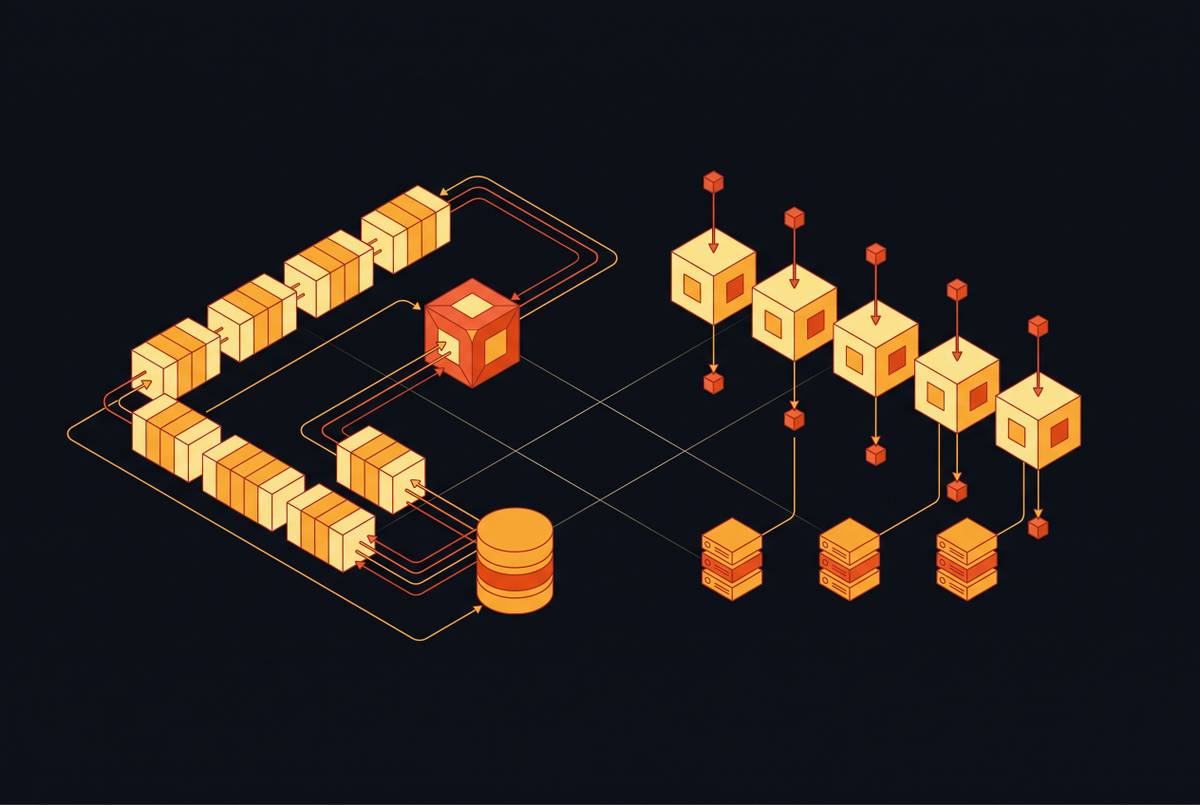
Just-in-time retrieval, pulling fresh, structured information exactly when it is needed, replaces what practitioners have come to call the re-indexing tax. That tax forces teams to continuously update a background index, a process that burns engineering time and imposes its own latency. Agents that use JIT retrieval avoid that bottleneck entirely, because they never maintain an index that can go stale.
The three dimensions that actually separate AI-native APIs from SERP wrappers in production
In production, three dimensions determine whether a search API can carry an agent workload: retrieval quality across iterative hops, full-page content delivery, and structured output that fits directly into a reasoning loop. SERP wrappers fail on all three, and understanding why gives a developer a practical checklist that applies to any provider. Retrieval quality across iterative hops is the first test. Agents that search iteratively, search, reason, search again, need result quality to hold at hop three, not just hop one. A SERP wrapper that surfaces the same ten links regardless of query refinement degrades rapidly in multi-step loops. Many search MCPs marketed at AI agents are wrappers around Google or Bing. Systems built around iterative retrieval score dramatically higher, and the tool matters less than whether it supports a loop.
Full-page content delivery is the second dimension. APIs that return clean full-page content in one request eliminate a downstream fetch step and reduce the context noise an agent must filter. The grounding pipeline requires usable page content. Titles and snippets are not enough for an LLM to form a cited, faithful answer, because the source material must be present in the context window.
Structured output compatibility completes the set. An agent cannot act on unstructured text without a parsing step. APIs that return typed, schema-conforming output, JSON with defined fields, Markdown with preserved structure, reduce that overhead and make the retrieval step predictable. A grounded answer can still retrieve the wrong page, quote stale information, or ignore retrieved context, which is why citation provenance and source control matter at the API level, not just at the model level.
How to read benchmarks honestly when choosing between AI search APIs
Benchmark scores are the most honest way to compare AI search infrastructure, but only when you understand what each benchmark actually tests and whose numbers you are reading. Self-reported latency and accuracy figures are not neutral. A vendor's headline number for its fastest mode may not reflect the mode an agent actually uses in a reasoning loop, where deeper retrieval and full-page content typically come into play.
An independent 2026 benchmark tested eight search APIs on AI-oriented queries and evaluated retrieved results. Token efficiency is a distinct dimension from raw accuracy. The disciplined approach is to pick a minimum accuracy target for your application, then compare token efficiency, speed, and cost among the APIs that clear it, not before. You.com's Research API holds the top benchmark position on DeepSearchQA, and its Finance Research API ranks first on FinSearchComp's T2 tier for simple historical lookup. These are self-reported results published by You.com itself, not independently verified third-party benchmark rankings, and a careful reader weighs them accordingly.
The leading AI search APIs in production: what each one actually does and where it fits
The field has matured into distinct approaches, and the right choice depends on where search sits in an agent's architecture. No single API wins every job. Parallel Search builds its own independent index and returns ranked excerpts optimized for token relevancy. Pages are surfaced by information density for the agent's next action, not by consumer ranking signals. Four search modes tier by latency and depth: Turbo at roughly 200 milliseconds and $1 per 1,000 requests for voice and high-volume grounding. Fast at around 700 milliseconds for interactive tool-calling loops. Basic at roughly one second for longer source passages. And Advanced at around three seconds with multi-hop retrieval and compression for background research agents. Its benchmark comparison pairs Parallel search modes with GPT-5.6 Sol and GPT-5.6 Luna agents and grades answers by LLM judge, a methodology that covers both the search tool and the extract tool in the same call chain. It fits teams building against a tiered latency budget across different agent task types, or agents that need semantic objective framing rather than keyword queries.
Perplexity Sonar is a web-grounded LLM response API with streaming and citation support. It fits agents that need a finished cited answer in one call rather than a retrieval list to reason over independently. Before treating Sonar and a raw search API as equivalent, compare the cost of the complete workflow including model generation.
Linkup offers SOC 2 Type II on all plans, with zero data retention available on all plans on request and not restricted to Enterprise. Standard search is priced at $0.005 per search results call and $0.006 for sourced or structured output. Deep search runs $0.05 and $0.055 respectively. Errors and no-result queries are not charged. It fits source-grounded answers with procurement or compliance review requirements, and teams should test citation support and failure behavior with their own questions before committing.
ScrapingBee provides full headless browser rendering and automatic proxy rotation, bypassing sophisticated anti-bot systems and providing structured output for ingestion. It fits teams building proprietary indexes or needing to bypass heavy JavaScript walls and anti-bot protections to index specific websites. For teams that need a ready-made structured search result, it is overkill.
Agent steps and browser time are billed separately from free search, so the cost of the complete workflow, not just the search price, is what matters. It fits workflows that span discovery, extraction, and interaction, and token-budget-constrained agents where context window cost is the binding constraint.
Grounding with Bing Search inside Azure AI Agents represents an architectural shift rather than a direct product. Microsoft retired all Bing Search APIs on August 11, 2025, and the replacement feeds context to a model inside Azure AI Agents rather than returning structured results to the developer's pipeline. It fits teams already inside Azure AI Agents who want a managed grounding option. It is not a like-for-like replacement for structured SERP API access.
How grounding APIs fit into the enterprise agent stack: RAG pipelines, LLM orchestration, and agentic loops
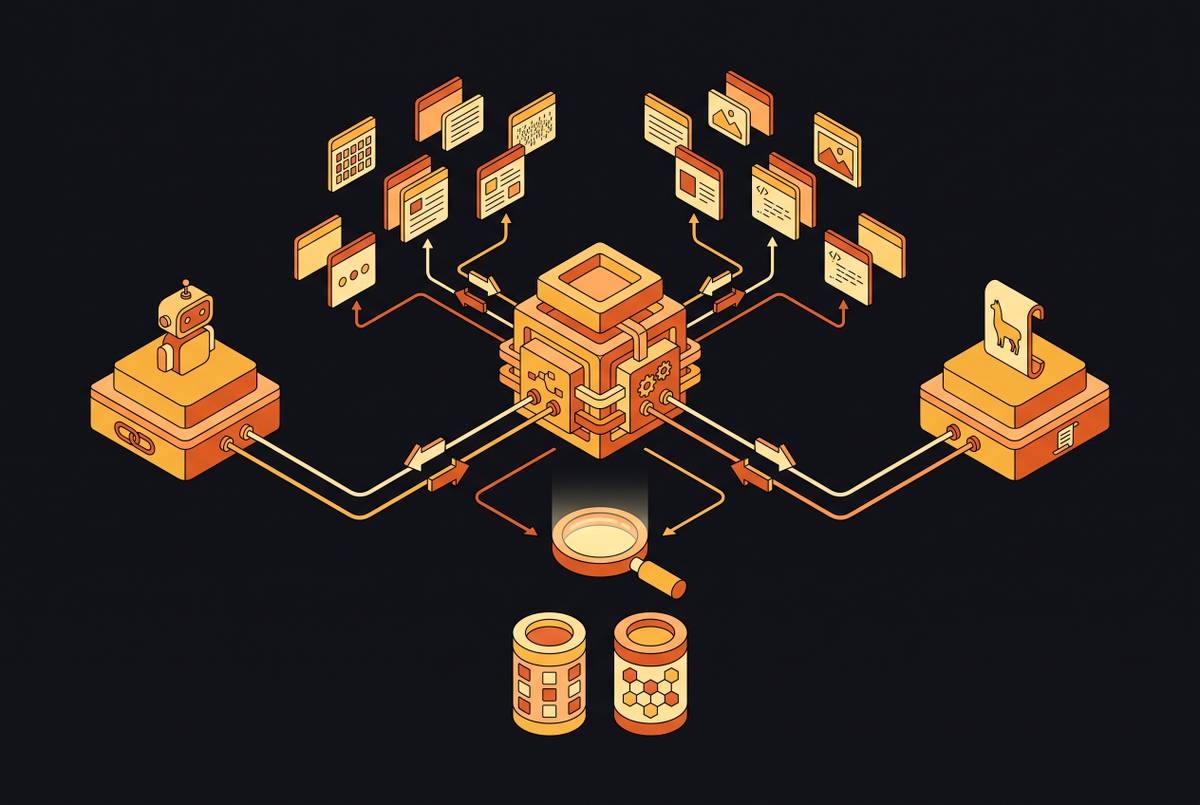
A grounding API is not a standalone tool. It is the live-web interface for an entire retrieval pipeline, and how it connects to orchestration layers, context windows, and downstream tools determines whether it delivers its benchmark performance in practice. In a RAG pipeline, the search API sits between the agent's query formulation and the LLM's answer generation. The API controls source recall, freshness, and citation provenance at that boundary, which means a poor choice at the retrieval layer propagates through every subsequent step.
Many search MCPs are wrappers around Google or Bing. The network layer is now recognizing this distinction at the infrastructure level. Cloudflare's new defaults effective September 15, 2026, and Akamai's separation of AI traffic into training crawlers, search crawlers, and fetchers or agents signal that routing and authentication are beginning to distinguish agent traffic from human browsing, a maturation that affects how search APIs route and authenticate requests. The alternative, re-indexing data in the background, imposes a re-indexing tax that creates delays which just-in-time retrieval eliminates.
Security, compliance, and data privacy requirements that belong at the search API layer
For enterprise deployments, compliance requirements belong in the API selection criteria from the start, not as an audit step after the architecture is set, because zero data retention, SOC 2 Type II certification, and regional hosting are not features that can be added later. SOC 2 Type II covers a sustained audit period rather than the point-in-time assessment of Type I, which is why it is the meaningful certification for a production data pipeline. Type I tells you controls existed on one day. Type II tells you they held over time.
SOC 2's access control criteria raise a genuine audit question for agentic systems. Zero data retention at the third-party provider is the baseline for financial AI, and EU-based institutions additionally need regional hosting that satisfies DORA and GDPR, with all AI features, not just data storage, available in the required region. Linkup lists SOC 2 Type II on all plans but zero data retention only under Enterprise, a meaningful distinction for teams whose compliance requirements include both.
Financial intelligence as a specialized case where cited, source-reconciled output is non-negotiable
Financial AI is the domain where the gap between a cited, source-reconciled answer and an unverifiable one is most consequential, and it is where search API quality requirements are sharpest. Advisor tools, such as JPMorgan Chase's Coach AI, enable advisors to respond faster during periods of market volatility. Both depend on retrieval quality at the moment of inference.
Financial outputs that cannot be traced to a specific source and verified after the fact have no place in serious research or decision-making workflows. This is not a preference but a governance requirement in regulated environments, and it means the search API beneath a financial agent must preserve citation provenance at every retrieval step. The sharpening of requirements in this domain explains why specialized financial retrieval APIs exist as a distinct product category rather than a configuration of a general one.
How to evaluate and integrate a search API against your agent's actual production requirements
The best search API for an agent is not the one with the highest benchmark score in isolation. It is the one whose latency mode, content depth, output schema, and compliance posture match the specific job the agent does in production. The evaluation should start with the agent's call pattern: how many search hops per task, what latency budget per hop, how much context the model can consume per retrieval step. These numbers determine which API tier is relevant before any other comparison.
From there, set a minimum accuracy target first, then compare token efficiency, speed, and cost among the APIs that clear it. A 92% accuracy score on a general benchmark can mask a 60% score on the narrow domain an agent actually covers. For multi-hop research agents, verify that result quality holds at hop three, not just hop one, and run a loop test rather than a single-query evaluation.
For enterprise deployments, run the compliance filter before shortlisting. SOC 2 Type II, zero data retention, and regional hosting requirements can eliminate options before any technical evaluation begins. Microsoft's retirement of the Bing Search APIs on August 11, 2025, with one quarter for teams to re-platform, established that vendor stability and index independence are legitimate rubric items. An API built on a resold index inherits the risk profile of the underlying provider. The task tomorrow morning is not to read more benchmarks. It is to run your agent's actual queries against a shortlist, measure hop-three quality, and check the compliance box before any contract is signed.